
27-A102 From Cathedrals to Courts: Music in Europe during the Renaissance (1400–1600) – Morteza Abedinifard
$85.00
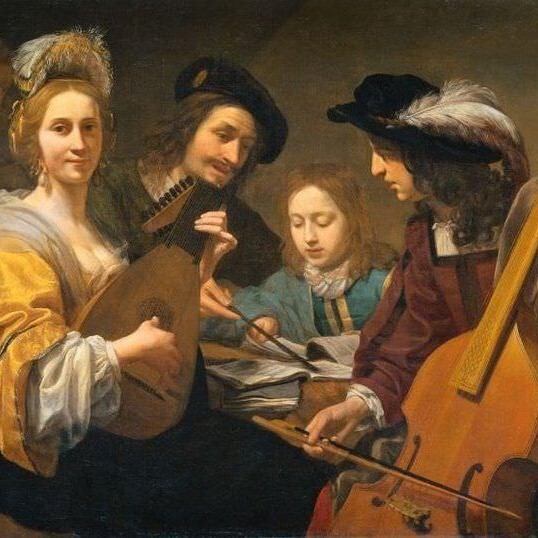
This course explores the musical world of Renaissance Europe (c. 1400–1600), an age of cathedrals and courts, of humanism and artistic experiment. Through guided listening, discussion and historical context, we will follow how music changed over two centuries, from the intricate polyphony of Dufay, Ockeghem and Josquin to the expressive madrigals of Monteverdi, and how it prepared the ground for the Baroque. We will look at sacred and secular music, the rise of music printing, the effects of the Reformation and the ties between music, religion, politics and daily life. No prior musical knowledge is required, only curiosity and a willingness to listen. By the end, participants will have a deeper appreciation of one of the most beautiful traditions in Western music.
Please note: All classes are two hours with the exception of the last class on Feb 18, which is one hour.
Instructor: Morteza Abedinifard

Morteza Abedinifard is a musicologist, composer and setar player. He holds a SSHRC Postdoctoral Fellowship at the Schulich School of Music, McGill University, where he studies Iranian musical modernity. His research covers the history and philosophy of music, with particular attention to Persian classical music, and he has presented his work at various national and international conferences. Alongside his scholarly writing, he plays and composes music drawing on Kurdish and Persian traditions.
